
Klotho is often called the longevity gene, a master regulator that supports healthy aging at the deepest biological level. Discovered in 1997, this powerful protein plays a critical role in cellular protection, brain vitality, metabolic balance, and systemic resilience.
As we age, Klotho levels naturally decline.
With that decline comes increased vulnerability , oxidative stress, inflammation, cognitive slowdown, and cellular inefficiency.
Klotho represents more than longevity. It represents cellular intelligence, the body’s innate ability to regulate, repair, protect, and adapt.
At the intersection of genetics, neuroscience, and regenerative science, Klotho stands as one of the most compelling discoveries in modern aging research.
Longevity is not about living longer.
It is about living intelligently, at the cellular level.
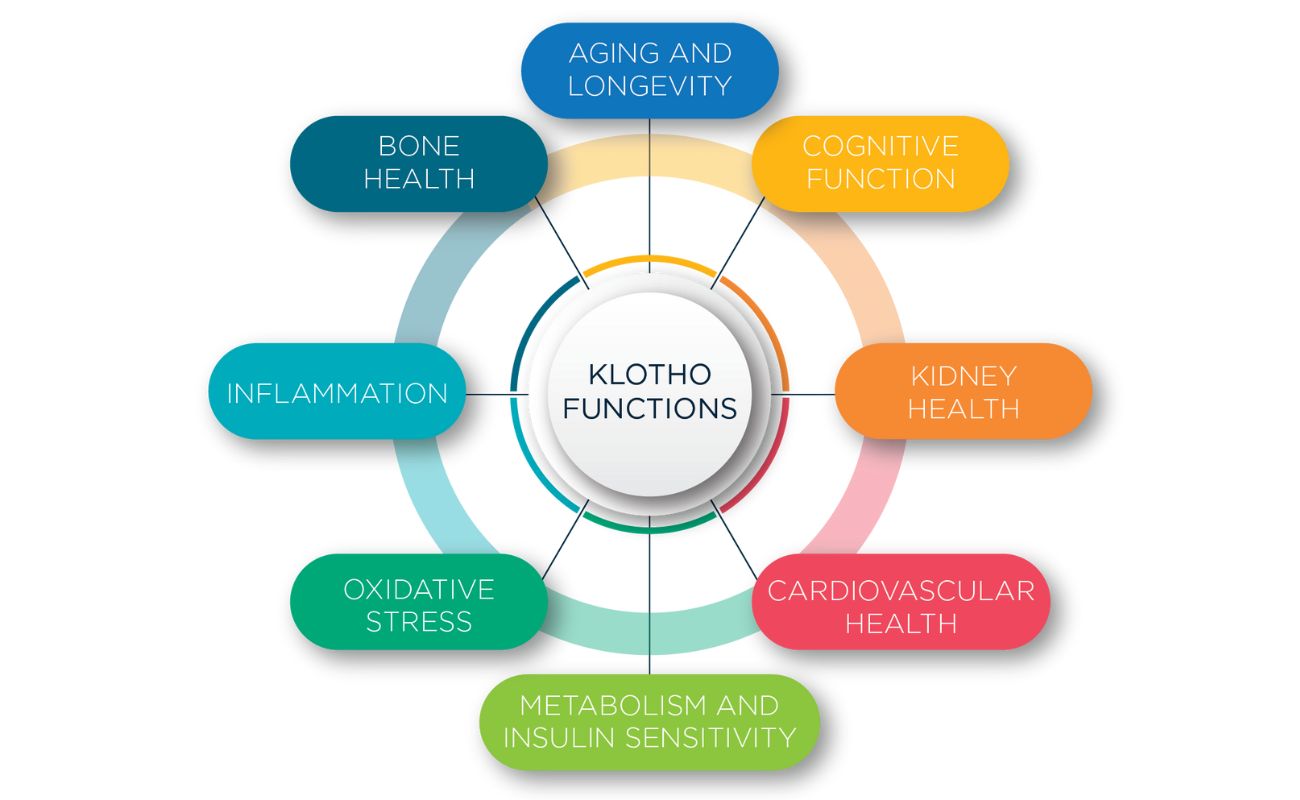
Klotho is often referred to as an "anti-aging" protein. Higher levels of Klotho have been associated with increased lifespan and improved health span, which is the period of life spent in good health.


Klotho influences cardiovascular health by modulating processes like vascular calcification and endothelial function, which are crucial for preventing heart diseases.

Klotho is often referred to as an "anti-aging" protein. Higher levels of Klotho have been associated with increased lifespan and improved health span, which is the period of life spent in good health.

Klotho is primarily produced in the kidneys and plays a critical role in renal function. It helps regulate phosphate and calcium levels, protecting against chronic kidney diseases.

Klotho affects metabolic processes, including insulin signaling. Higher levels of Klotho are linked to improved insulin sensitivity and reduced risk of diabetes.

Klotho has antioxidant properties that help protect cells from oxidative stress and reduce inflammation, both of which are linked to various chronic diseases.

By regulating calcium and phosphate metabolism, Klotho plays a role in maintaining bone health and preventing disorders like osteoporosis.
Disclaimer: Klo-Cel is a food supplement and is not intended to diagnose, treat, cure, or prevent any disease. It should not be used as a substitute for a varied, balanced diet and a healthy lifestyle.

KLOTHO: THE SECRET TO LONGEVITY, ANTI-AGING, AND TRANSFORMATIVE HEALTH.
© Copyright 2026 Celvante SA. All rights reserved
